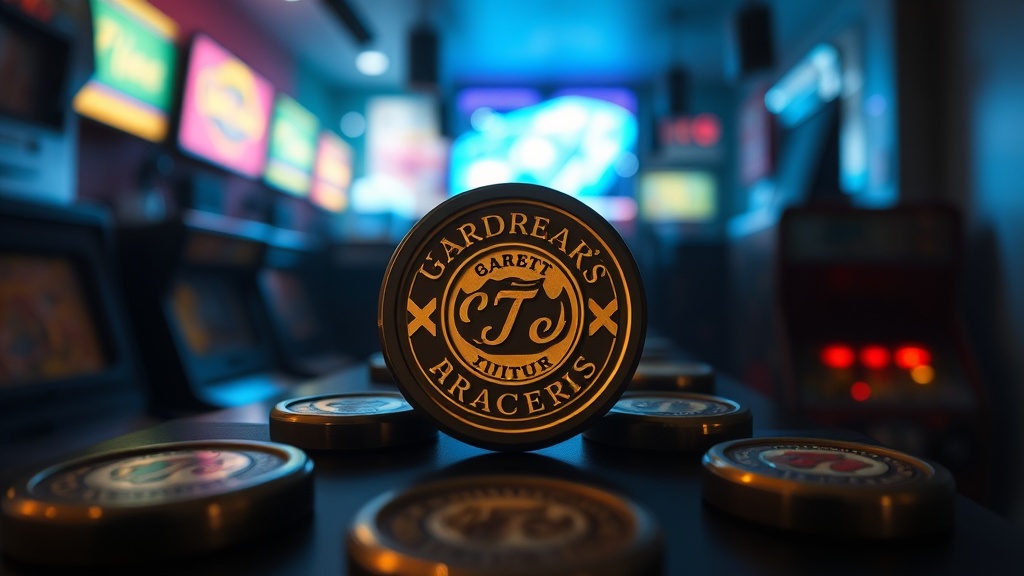
Tracing the Origins of Early Arcade Token Designs

Many collectors assume that arcade tokens were simply cheap, generic metal discs minted to facilitate coin-operated gaming. This is a mistake. Early arcade tokens were often highly specialized tools of commerce, designed with specific metallurgical properties and distinct visual identities that differentiated them from standard legal tender. Understanding the origin of these designs requires looking past the metal and into the industrial history of the mid-20th century. This post examines how the transition from nickel-based currency to proprietary arcade tokens shaped the aesthetics and durability of the pieces we collect today.
The evolution of token design wasn't accidental. It was a response to the economic realities of the 1960s and 70s, where manufacturers needed a way to bypass the limitations of the US Mint and various international coin-producing agencies. If a company wanted to run a high-volume arcade, they couldn't rely on the fluctuating costs of standard quarters. They needed something distinct—something that felt "official" to a player but was legally non-tender.
What Influenced Early Arcade Token Design?
Early arcade token design was primarily driven by the need for visual distinction and brand recognition within a single venue. While a standard quarter relies on federal standards for weight and diameter, an arcade token was a blank canvas for a business to establish its identity. This led to a period of intense creativity where tokens became much more than just a medium for playing games; they became miniature pieces of marketing art.
Manufacturers like the various minting companies specialized in creating designs that were difficult to counterfeit but easy to recognize. The design language of the 1970s often featured bold, geometric shapes or central icons that mirrored the era's fascination with the Space Age. You’ll see a lot of sunburst patterns, starbursts, and heavy, sans-serif typography. These weren't just for looks—they were meant to be legible even when the token was spinning rapidly inside a machine's coin mech.
The weight of the token also played a role in the design philosophy. A heavy, brass-toned token felt more "valuable" to a teenager standing at a Pac-Man machine than a light, aluminum piece. This psychological aspect of weight and texture is a core part of why certain eras of tokens feel more "premium" to modern collectors. (It’s a subtle detail, but it makes a huge difference in how a piece feels in your hand.)
Looking at the transition from the early mechanical era to the digital era, the design language shifted significantly:
- The Mechanical Era (1950s-1960s): Designs were often utilitarian, featuring simple embossed lettering and basic circular borders.
- The Golden Age (1970s-1980s): This era saw the rise of complex iconography, including mascots, lightning bolts, and intricate-border patterns.
- The Digital/Modern Era (1990s-Present): Designs became more streamlined, often using thinner lines and more minimalist, corporate-style logos.
Why Did Token Materials Change Over Time?
The change in materials was a direct result of the rising cost of raw metals and the need for durability in high-use environments. As the price of copper and nickel fluctuated, manufacturers had to decide between maintaining the "feel" of the token or keeping the cost per unit low. This decision often dictated the long-term survival of the design's aesthetic integrity.
Early tokens often utilized high-quality alloys that resisted oxidation. However, as the industry scaled, many manufacturers moved toward cheaper metals. This shift is a primary reason why many vintage tokens show significant wear or "pitting." If you are looking at a collection, the metal composition is a huge factor in how the design holds up. In fact, understanding why metal composition matters for long-term preservation is a great way to understand why some pieces look pristine while others look weathered.
| Material Type | Common Era | Typical Visual Characteristics | Durability Rating |
|---|---|---|---|
| Brass/Bronze | 1960s | Warm, gold-like tone; high luster | High (Resistant to wear) |
| Nickel/Copper | 1970s-1980s | Silver or reddish hues; heavy weight | Medium (Can oxidize) |
| Aluminum | 1990s-Present | Bright silver; lightweight; thin | Low (Prone to scratches) |
The move to aluminum was a significant turning point. While it kept costs down, it stripped away that sense of "heft" that many collectors crave. It's a classic example of how industrial efficiency can sometimes work against the longevity of a collectible's appeal. A lighter token often lacks the tactile satisfaction of a heavy brass piece—it just doesn't feel "real."
How Can You Identify Authentic Vintage Designs?
Authentic vintage designs can be identified by checking the edge grain, the depth of the strike, and the specific metallurgical properties of the piece. Counterfeit or modern "reproduction" tokens often lack the crispness of a heavy-duty industrial strike. If the lettering looks shallow or the edges are overly smooth, it might not be a genuine piece from the era it claims to represent.
When examining a token, look closely at the "rim" or the edge. Authentic arcade tokens from the Golden Age often have a very specific edge-grain or a "reeded" edge that was meant to prevent tampering. Modern, cheaper versions often have a smooth, machine-finished edge that looks too perfect to be old. This is where many collectors get tripped up. A "perfect" looking token isn't always a good sign; sometimes, a little bit of authentic patina is the best way to prove its history.
A common mistake is assuming that a shiny token is a well-preserved one. Often, a shiny token is actually a modern reproduction that hasn't undergone the decades of friction and oxidation that a true vintage piece would have. You should also consider the weight. If you have a token that is supposed to be from a 1970s brass-era production but it feels light as a feather, you might be looking at a much later, cheaper production. For more on identifying surface characteristics, check out what surface marks reveal about authenticity.
There are three main things to check when verifying a design's era:
- The Strike Depth: Genuine vintage tokens were struck with heavy pressure. The relief should be deep and the lines should be sharp, not blurry.
- The Edge Texture: Check for reeding or specific edge-marking that was standard for the time.
- The Weight-to-Size Ratio: A token that feels too light for its diameter is often a red flag for a modern, low-cost production.
The history of these objects is a history of industrial-scale creativity. Designers weren't just making a way to play a game; they were creating a physical extension of the arcade experience. Whether it's the heavy brass of the 60s or the sleek aluminum of the 90s, each design tells a story about the economic and technological limits of its time. Collectors who pay attention to these nuances will find much more than just metal—they'll find the actual DNA of the arcade age.