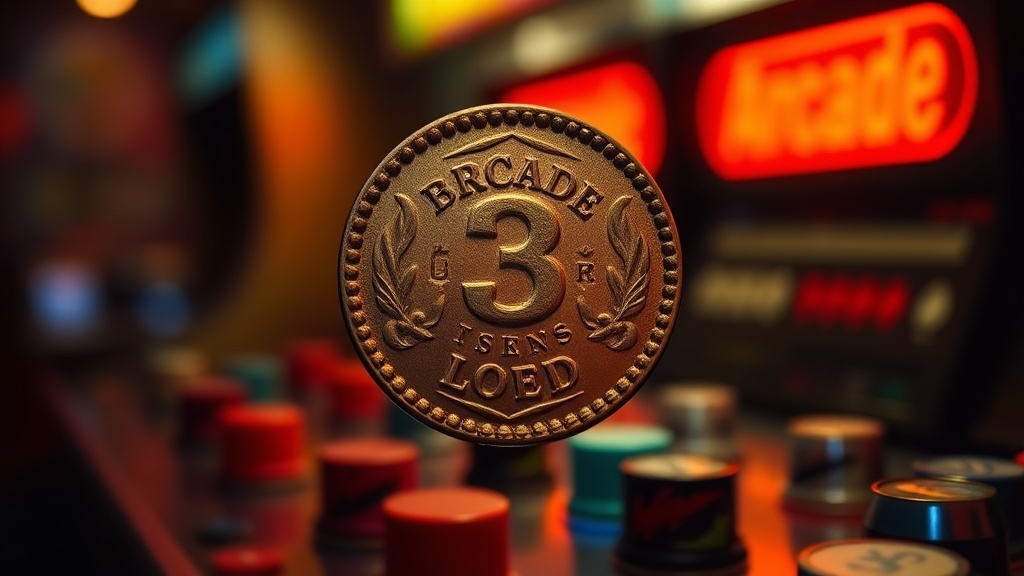
The Hidden Value of Rare Arcade Token Variations

What Makes One Arcade Token Worth More Than Another?
This post explores the specific physical and historical factors that drive up the market value of arcade tokens. You'll learn how to identify subtle differences in metal composition, strike quality, and production runs that separate a common piece of scrap metal from a high-value collector's item. Understanding these distinctions is the first step toward building a profitable collection rather than just a pile of metal.
Value in the world of arcade collectibles isn't just about age; it's about rarity and the specific circumstances of a token's birth. A token might be fifty years old, yet if a million of them were minted for a single arcade chain, the value remains low. Conversely, a newer token from a limited-run promotional event might hold much more weight. We aren't just looking at the date stamped on the surface, but the story behind the metal itself.
One major factor is the metal blend. Collectors often look for specific alloys that were used during certain eras. For example, during periods of high copper prices, many manufacturers switched to zinc or brass-plated steel to save costs. These shifts in manufacturing can create distinct "variations" that collectors hunt for. If you find a token that uses a rare alloy previously thought to be discontinued, you've found a potential gold mine. You can research metal compositions through resources like the National Institute of Standards and Technology to understand how various alloys behave over time.
How Do I Spot a Rare Token Variation?
Finding a rare variation requires a keen eye for detail. You shouldn't just look at the center of the coin; look at the rim, the edge, and the depth of the strike. A "deep strike" refers to a token where the imagery is sharp and high-relief, whereas a "weak strike" looks flat and blurry. In the collecting community, high-relief strikes are often much more sought after because they represent a higher quality of production.
Check for these three specific things when inspecting a new piece:
- Edge Lettering: Some tokens have text or patterns on the edge (the thickness) rather than just the face. This is a common way to distinguish premium versions from standard ones.
- Weight Discrepancies: Even a single gram difference can signal a different metal composition or a different minting facility.
- Die Errors: Sometimes, the metal stamp (the die) breaks or wears down during a run. This creates "errors" like doubled lettering or broken imagery. These aren't mistakes to be tossed aside—they are often the most valuable pieces in a set.
If you're looking at a token and it feels slightly different in weight than others in your collection, don't ignore that instinct. A different weight almost always means a different internal structure. This is why many serious collectors use high-precision digital scales rather than just eyeballing the weight.
Why Does the Minting Process Affect Collector Price?
The process of how a token is struck determines its longevity and its aesthetic appeal. High-volume arcades often used cheaper, faster methods that resulted in thinner, less durable tokens. These are often referred to as "budget tokens." While they are common, they are less desirable because they show wear much faster. A token that retains its original luster (that shiny, new-looking surface) will always command a higher price than one that has been tumbled in a bin of thousands of others.
The way a token is struck also affects its "relief." High relief means the design stands out prominently from the base metal. Low relief means the design is shallow. When you are browsing auctions or local shops, always ask about the strike quality. A high-relief token from a defunct arcade chain like "Aladdin's Castle" or a specific regional chain can be a centerpiece of a collection. You can often find historical data regarding manufacturing standards on sites like the The Strong National Museum of Play, which tracks the evolution of gaming-related artifacts.
It is also worth noting the role of the "die" in the minting process. If a die was used for a long time, it becomes worn, leading to a "mushy" look on the tokens produced toward the end of the run. Collectors often debate whether a worn-look token is a "common-era" piece or a "late-run" piece. This distinction is where the real profit margins live. A well-struck, early-run token is almost always worth more than a worn, late-run version of the same design.
When you are evaluating a collection, don't just look at the face value. Look at the consistency. A set of ten tokens that all have the exact same weight and strike depth is much more valuable to a collector than a mismatched pile. This consistency proves that you are looking at a specific, controlled production run, which is exactly what enthusiasts want to buy. Keep your eyes peeled for those tiny inconsistencies—they are the key to finding the true gems in the arcade world.