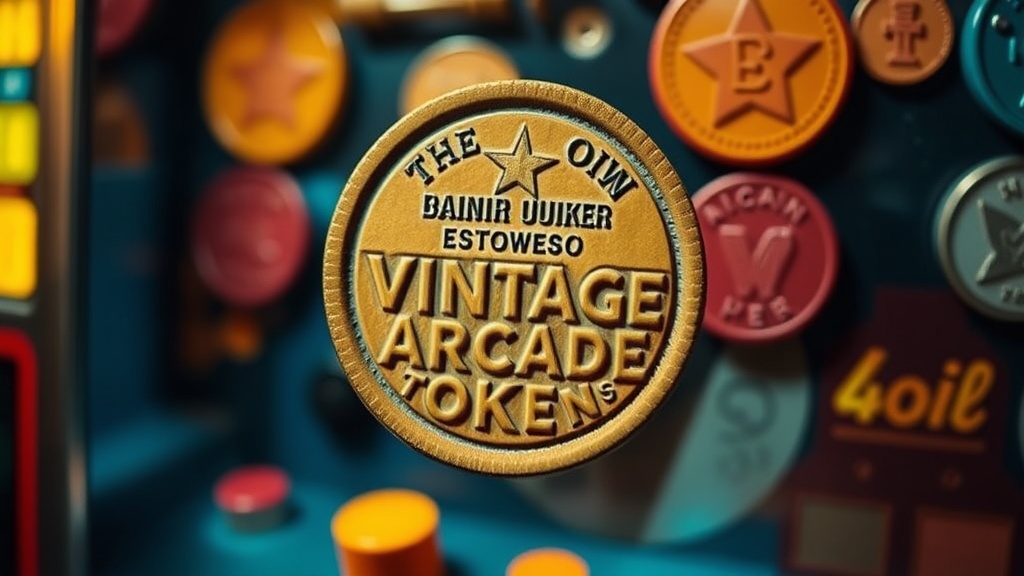
The Complete Collector's Guide to Vintage Arcade Tokens

What Makes Arcade Tokens Worth Collecting?
Arcade tokens represent a tangible piece of gaming history—small metal disks that once granted access to countless hours of entertainment in dimly lit game rooms across North America. This guide covers everything from identifying rare specimens to building a collection that holds both sentimental and monetary value. Whether you've stumbled across a handful of old tokens in a drawer or you're looking to start a focused collection, you'll find practical advice on authentication, valuation, storage, and where to hunt for the most sought-after pieces.
How Do You Identify Vintage Arcade Tokens?
Identification starts with understanding the basic anatomy of an arcade token: the metal composition, diameter, edge design, and—most importantly—the markings that reveal where and when it was used.
Most vintage tokens fall into three material categories. Brass tokens (common from the 1970s through early 1990s) develop a warm golden-brown patina over time. Copper-nickel alloys (popular in the 1980s) tend to keep their silvery appearance but may show greenish oxidation spots. Pure aluminum tokens—often from budget-conscious arcades or family fun centers—are lightweight and prone to denting.
The diameter matters more than most newcomers realize. Standard arcade tokens typically measure between 0.900 and 0.984 inches (roughly 22.9 to 25mm). Tokens outside this range often indicate foreign manufacture or specialized use—like transit tokens mistakenly grouped with arcade collectibles.
Edge markings separate the hobby pieces from the genuinely collectible. Reeded (grooved) edges suggest professional minting, common with major chains like Dave & Buster's or Chuck E. Cheese. Smooth edges might indicate local arcades using cheaper production methods—or counterfeits. The catch? Some of the most valuable tokens have smooth edges because they came from short-lived establishments that couldn't afford custom dies.
Here's the thing about markings: the more specific, the better. "Good for 25¢ in Trade" tells you little. "Aladdin's Castle - Lloyd Center, Portland, OR" with a phone number? That's gold—literally and figuratively. Location-specific tokens document defunct businesses, making them historically significant regardless of condition.
Red Flags in Token Authentication
Counterfeit arcade tokens exist, though they're less common than fake coins or casino chips. Watch for these warning signs:
- Unusual weight—genuine tokens from established mints have consistent heft
- Soft or blurry details, suggesting cast metal rather than struck dies
- Modern plating over base metal (test with a magnet—brass and copper aren't magnetic)
- Designs that reference games released decades after the token's supposed era
When in doubt, consult the Token and Medal Society reference materials or connect with experienced collectors through their membership network.
What Are the Most Valuable Arcade Tokens to Look For?
Scarcity drives value in the token market more than age alone—tokens from short-lived establishments or single-location arcades typically command higher prices than mass-produced pieces from national chains.
The holy grails include early Chuck E. Cheese "Pizza Time Theatre" tokens from the 1977-1984 period, particularly those from franchise locations that closed quickly. ShowBiz Pizza tokens (before the 1990 consolidation with Chuck E. Cheese) regularly sell for $15-40 each in decent condition. Tokens from pioneering video game arcades like Computer Space locations or early Atari-founded establishments can exceed $100 when documented.
Regional chains produced limited runs that collectors now prize. Aladdin's Castle—the Bally-owned chain that dominated mall arcades in the 1980s—issued location-specific tokens for individual malls. The Lloyd Center Portland token mentioned earlier? Expect to pay $25-50. The same design from a major Chicago location might fetch $8.
| Token Type | Typical Value Range | Rarity Factor |
|---|---|---|
| Mass-market chain (current) | $0.50 - $2 | Common |
| Defunct national chain | $3 - $15 | Uncommon |
| Location-specific (major city) | $8 - $25 | Scarce |
| Location-specific (small town/defunct) | $20 - $100+ | Rare |
| Prototype/error tokens | $50 - $500+ | Very Rare |
Worth noting: condition affects value dramatically in this hobby. Unlike coins where "fine" vs. "very fine" might mean a 20% price difference, arcade tokens often see 50-100% swings because so few survive in pristine condition. The tokens were meant to be spent, jammed in machines, dropped on concrete floors.
Error Tokens and Varieties
Minting errors create some of the most desirable pieces. Off-center strikes, double strikes, and wrong-metal planchets turn ordinary tokens into conversation pieces. The 1983 Aladdin's Castle "no date" variety—missing the year stamp through die wear—sells for triple the standard price despite looking like a production mistake. (It was.)
Where Can You Find Vintage Arcade Tokens Today?
Sources fall into three categories: dedicated dealers, general marketplaces, and the thrill of the hunt at physical locations.
eBay remains the largest marketplace, with hundreds of listings active at any moment. Search terms matter—"arcade token lot" yields bulk purchases, while specific location names ("ShowBiz Pizza token," "Aladdin's Castle Seattle") surface individual pieces. The downside? Competition drives prices up, and photos don't always reveal condition issues like corrosion or cleaning damage.
Specialized dealers offer curated inventory with guarantees. Exonumia dealers—those who trade in tokens, medals, and related items—often carry arcade pieces alongside transportation and trade tokens. Expect to pay 20-40% premiums over eBay prices, but with accurate grading and return policies.
Here's the thing about finding tokens in the wild: it's harder than it used to be, but not impossible. Estate sales in areas with strong arcade history (California's Silicon Valley, Chicago's suburbs, any mall town from 1980-1995) occasionally yield jars of mixed tokens sold as "junk drawer" lots. Flea markets and antique malls sometimes have tokens misidentified as "old coins" in generic display cases.
The Edmonton connection runs deeper than most realize—Western Canada had a vibrant arcade scene through companies like Palace Amusements and local independent operators. Calgary's Eau Claire Market and Edmonton's West Edmonton Mall (once home to the World Waterpark and Fantasyland Hotel arcades) produced location-specific tokens that Canadian collectors actively seek.
Online Communities and Trade Networks
Facebook groups like "Arcade Token Collectors" and Reddit's r/coins (which tolerates token discussions) provide identification help and trading opportunities. The Token and Medal Society's annual conventions include arcade token specialists—worth attending if building a serious collection.
How Should You Store and Display Your Collection?
Proper storage prevents the environmental damage that destroys most casual collections within a decade.
Brass and copper-nickel tokens suffer from PVC damage when stored in soft plastic flips or albums with vinyl pages. The plasticizers react with metal, creating green slime that etches surfaces irreversibly. Mylar flips—rigid, chemically inert polyester sleeves—cost more upfront but protect indefinitely. Whitman and Guardhouse both manufacture suitable products sized for standard arcade tokens.
Humidity control matters enormously. Tokens stored in basements or garages develop verdigris (that green copper corrosion) even in protective holders. Silica gel packets in storage containers help, but consistent climate control works better. The ideal environment mirrors coin storage recommendations: 65-70°F with relative humidity below 50%.
That said, part of the appeal is display. Shadow boxes with individual compartments work beautifully for curated selections—imagine a grid of tokens from defunct establishments, each labeled with location and years of operation. Just ensure the backing material is acid-free and avoid direct sunlight, which fades any painted or enameled designs.
Cataloging Your Collection
Document everything. Photograph both sides of each token, record acquisition dates and prices, and note condition assessments. Spreadsheet software suffices for basic inventories, but dedicated numismatic software like Collectorz.com Coin Database offers mobile apps and cloud backup.
Insurance considerations apply once collections exceed modest values. Standard homeowner's policies often exclude collectibles or cap payouts at disappointing levels. A scheduled personal property endorsement—essentially listing specific valuable items—protects against theft, fire, and water damage. Photographic documentation supports any claims.
Building a Thematic Collection
Rather than accumulating randomly, consider focusing your efforts. Thematic collections tell stories—and stories increase both personal satisfaction and potential resale value.
Geographic collections document regional arcade history. Imagine owning tokens from every major arcade that operated in Edmonton between 1980 and 2000: Palace Amusements locations, West Edmonton Mall phases, independent operators from Whyte Avenue and downtown. The research alone teaches local business history.
Franchise collections trace corporate evolution. Chuck E. Cheese tokens changed designs repeatedly—Pizza Time Theatre era, ShowBiz merger period, Concept Unification redesigns, modern "Play Pass" transition pieces. Each design shift marks business decisions, marketing campaigns, sometimes corporate near-death experiences.
The catch? Thematic collecting requires patience. You'll pass on "good deals" that don't fit your focus. You'll overpay for rare pieces that complete a subset. The payoff comes in coherence—a collection that makes sense when displayed, that teaches something, that other collectors reference when building their own.
Start with what interests you. Tokens from games you actually played carry meaning that market value can't replicate. That battered Aladdin's Castle token from your hometown mall? Worth more to you than any pristine rarity—though perhaps keep it in a separate "personal history" section when serious collectors visit.