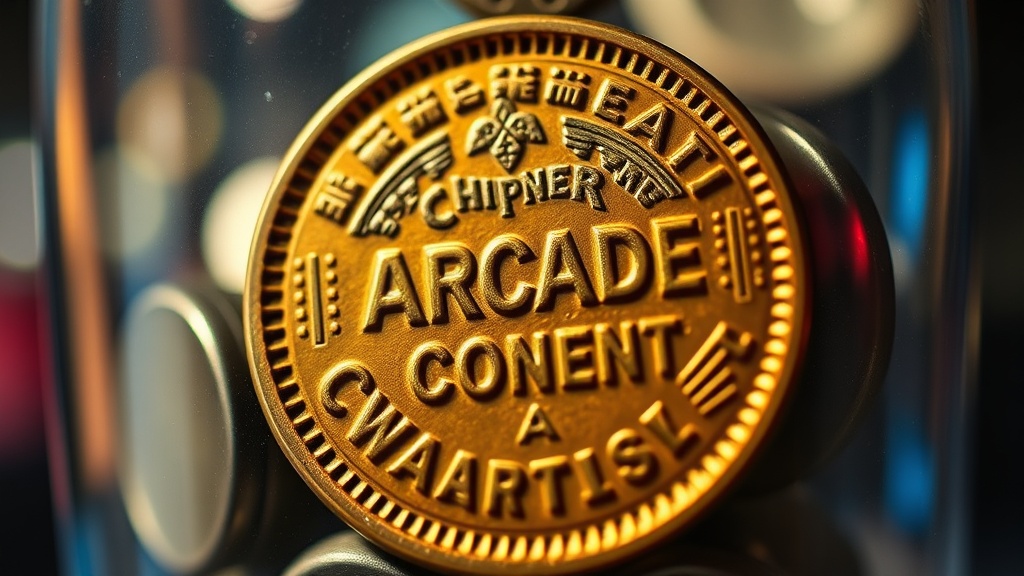
5 Rare Arcade Tokens That Could Be Hiding in Your Change Jar

Early Brass Chuck E. Cheese Tokens (1977-1980s)
Limited Edition Dave & Buster's Power Cards
Aladdin's Castle Gold-Plated Commemoratives
Tilt Arcade International Locations Set
Namco Wonder Park Exclusive Tokens
That loose change sitting in a kitchen drawer or forgotten jar might contain more than just quarters and dimes. Arcade tokens — those brass or copper coins once used at pizza parlors, bowling alleys, and amusement parks — have become surprisingly valuable collectibles. Some rare specimens now trade for hundreds of dollars among dedicated collectors. This post breaks down five specific arcade token types worth searching for, what makes them valuable, and how to identify them before they end up back in circulation.
What Makes an Arcade Token Valuable to Collectors?
Not every token commands top dollar. The most sought-after pieces typically share a few traits: limited production runs, ties to historically significant venues, or unusual metal compositions. Error tokens — those with double strikes, off-center designs, or missing details — also fetch premiums. Condition matters too, though even worn tokens from legendary locations (think the original Chuck E. Cheese Pizza Time Theatre locations) can hold significant value.
The market for arcade tokens runs deeper than most newcomers expect. Dedicated collectors organize by region, era, or specific franchise chains. Online communities like the Token and Medal Society provide authentication resources and pricing guides. Auction sites like eBay move thousands of tokens monthly, with rare pieces attracting competitive bidding.
Are Chuck E. Cheese Pizza Time Theatre Tokens Worth Money?
Yes — early Chuck E. Cheese tokens from the 1977-1980 period regularly sell for $50 to $300 depending on condition and specific location markings.
The original Pizza Time Theatre concept — created by Atari founder Nolan Bushnell — used distinctive brass tokens featuring the iconic mouse mascot. Locations from this era had unique reverse dies indicating their city or region. The San Jose prototype location tokens remain the holy grail, with authenticated specimens commanding $500+ at auction.
Here's what separates valuable early tokens from common modern equivalents:
| Feature | Valuable (1977-1980) | Common (1990s-Present) |
|---|---|---|
| Metal | Solid brass, heavier weight | Copper-plated zinc or aluminum |
| Design | "Pizza Time Theatre" full text | Simplified "Chuck E. Cheese" only |
| Reverse | City/location name stamped | Generic "25¢" or "Token" marking |
| Edge | Reeded (grooved) edge | Smooth or lightly textured |
Check any tokens carefully — the difference between a $2 souvenir and a $200 collector's piece often comes down to a few millimeters of text spacing or the presence of a location stamp on the reverse side.
What Are the Most Valuable Aladdin's Castle Tokens?
The 1975-1985 Bally/Midway-issued Aladdin's Castle tokens with the castle reverse design represent the most valuable pieces, particularly the "A" mint mark variants from the original Chicago flagship location.
Aladdin's Castle dominated mall-based arcades throughout the 1970s and 80s. Their tokens evolved through several design phases — and collectors catalog each variation obsessively. The earliest tokens featured detailed castle imagery with a small "A" mint mark beneath the drawbridge. These original issues used heavier brass stock and carried sharper relief details than later mass-produced runs.
The Chicago flagship location (Store #001) at the Randhurst Mall produced tokens with a distinctive "R" countermark — these rank among the most collectible arcade tokens in existence. Complete sets of Aladdin's Castle regional variants can take years to assemble, with individual location tokens trading for $75-$150 in circulated condition.
Later Aladdin's Castle tokens — particularly those issued during the Namco acquisition era of the late 1980s — carry less premium but still outperform generic arcade tokens. Look for the transition pieces that retained the castle imagery while adding Namco branding; these represent a specific historical moment in arcade industry consolidation.
Which Disney Arcade Tokens Should Collectors Look For?
Disney's short-lived but ambitious arcade ventures produced some of the most visually striking — and now valuable — tokens in the hobby, particularly the 1989-1994 DisneyQuest and Discovery Zone-branded pieces.
When Disney launched the DisneyQuest indoor interactive theme park concept in 1998, each location issued proprietary tokens for their arcade floors. The Chicago and Orlando DisneyQuest tokens featured detailed Mickey Mouse designs on high-quality brass blanks. These locations closed by 2017, making their tokens finite resources — no more will ever be produced.
The Discovery Zone connection adds another layer. Disney briefly held ownership stakes in the Discovery Zone family entertainment centers during the mid-1990s. Locations operating under this corporate umbrella issued tokens with small Disney copyright marks — easy to miss unless you're looking for them. These transitional pieces bridge two distinct eras of family entertainment history.
Discovery Zone tokens themselves — even without Disney markings — have developed collector followings. The chain's 1990s expansion produced location-specific variants from hundreds of cities. Complete Discovery Zone location sets represent serious collecting achievements, with some regional variants commanding $40-$80 per token.
How Much Are Vintage Pinball Machine Tokens Worth?
Pre-1960 pinball tokens — particularly those from Chicago's golden age manufacturers like Gottlieb, Williams, and Bally — regularly achieve $100-$500 values, with prototype and error pieces reaching four figures.
Before electronic coin mechanisms became standardized, pinball operators relied on proprietary tokens to control game access and prevent slug usage. Each major manufacturer developed their own token systems. Gottlieb's "G" tokens from the 1950s feature some of the finest engraving work in the industry — Art Deco styling that stands apart from later, more utilitarian designs.
The Williams Manufacturing tokens deserve special attention. During their 1940s-1960s dominance, Williams produced location-specific tokens for major venues. The Chicago Theatre district tokens — marked with theater names and addresses — represent交叉收藏价值 for both arcade and entertainment memorabilia collectors. A Williams token from the original Chicago Stadium arcade recently sold for $340 at specialized auction.
Bally's early tokens present identification challenges. The company issued tokens under multiple corporate names through various acquisitions — Bally Manufacturing, Bally Hoo, Bally Amusements. Learning to recognize these naming variations separates serious collectors from casual accumulators.
Where Can You Sell or Authenticate Rare Arcade Tokens?
Several established channels serve the arcade token marketplace, with authentication services available through professional numismatic organizations and specialized dealers.
For valuation and initial research, the Professional Coin Grading Service (PCGS) maintains token authentication standards, though their arcade token expertise varies by specialist. The Token and Medal Society offers membership directories connecting collectors with verified experts in specific token categories.
Direct sales options include:
- eBay: Largest active marketplace — search "sold" listings for accurate pricing, not just asking prices
- Heritage Auctions: Handles high-value arcade memorabilia including rare tokens
- Specialized Facebook groups: "Arcade Token Collectors" and regional groups facilitate peer-to-peer sales
- Convention floor sales: The California Extreme arcade show and Midwest Gaming Classic feature token trading
Authentication becomes critical for high-value pieces. Counterfeit arcade tokens exist — particularly for the most valuable Chuck E. Cheese and Disney issues. Weight verification provides the first line of defense; genuine tokens from major manufacturers used consistent metal compositions. Magnetic properties offer another quick test — authentic brass and copper tokens won't stick to magnets, while cheap reproductions often use ferrous metals.
The hunt for valuable arcade tokens rewards patience and knowledge. That jar of miscellaneous coins might contain a piece of gaming history — a tangible connection to the golden age of arcades, family entertainment centers, and the mechanical predecessors to today's digital gaming space. Worth noting: even common tokens carry nostalgic value, and building a collection starts with learning to recognize what's already within reach.